

System Provider
SAP is recognized as a leading platform provider, offering a broad portfolio of integrated treasury functions. The solution covers all key aspects of modern treasury management and has been further enhanced with the introduction of S/4HANA.
A major strength of SAP is its stability and predictability: services and scope are clearly defined, and acquisitions are rare, which provides continuity and confidence. SAP also relies on a solid business model supported by a mature partner network. This network includes numerous specialized partners and experts who help organizations design and optimize treasury processes efficiently. While it is not always easy to find partners with both SAP and treasury expertise, the breadth of the consulting market significantly reduces dependency on the provider’s own resources.
User Interface
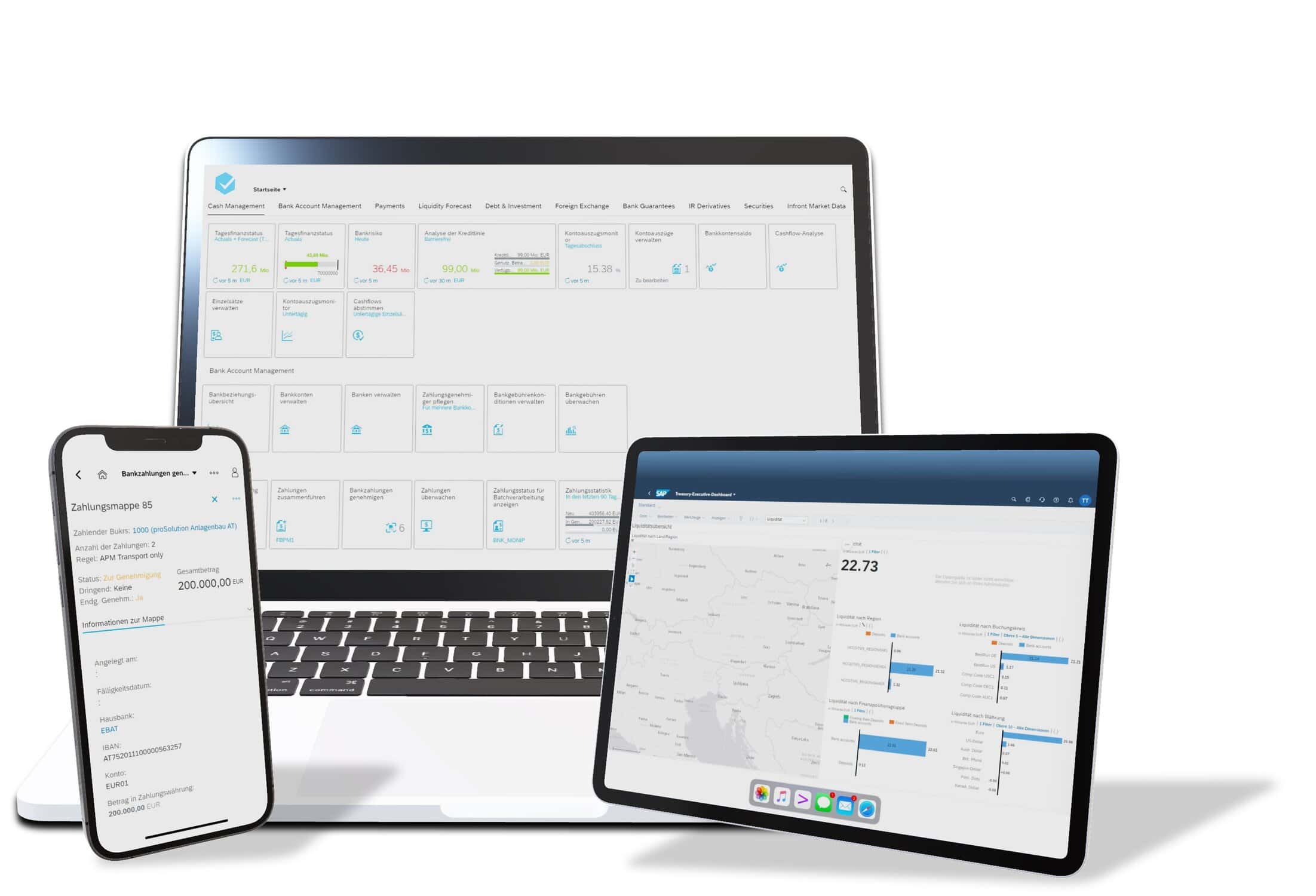
SAP FIORI offers a modern, user-friendly interface that improves interaction with SAP systems. For treasury users, it provides a wide range of features that make daily work more efficient and intuitive. At the same time, challenges need to be considered, as experiences can vary depending on implementation, customization and use. Careful planning and execution are key to realizing the full benefits and achieving the best results.
Modules and Functions
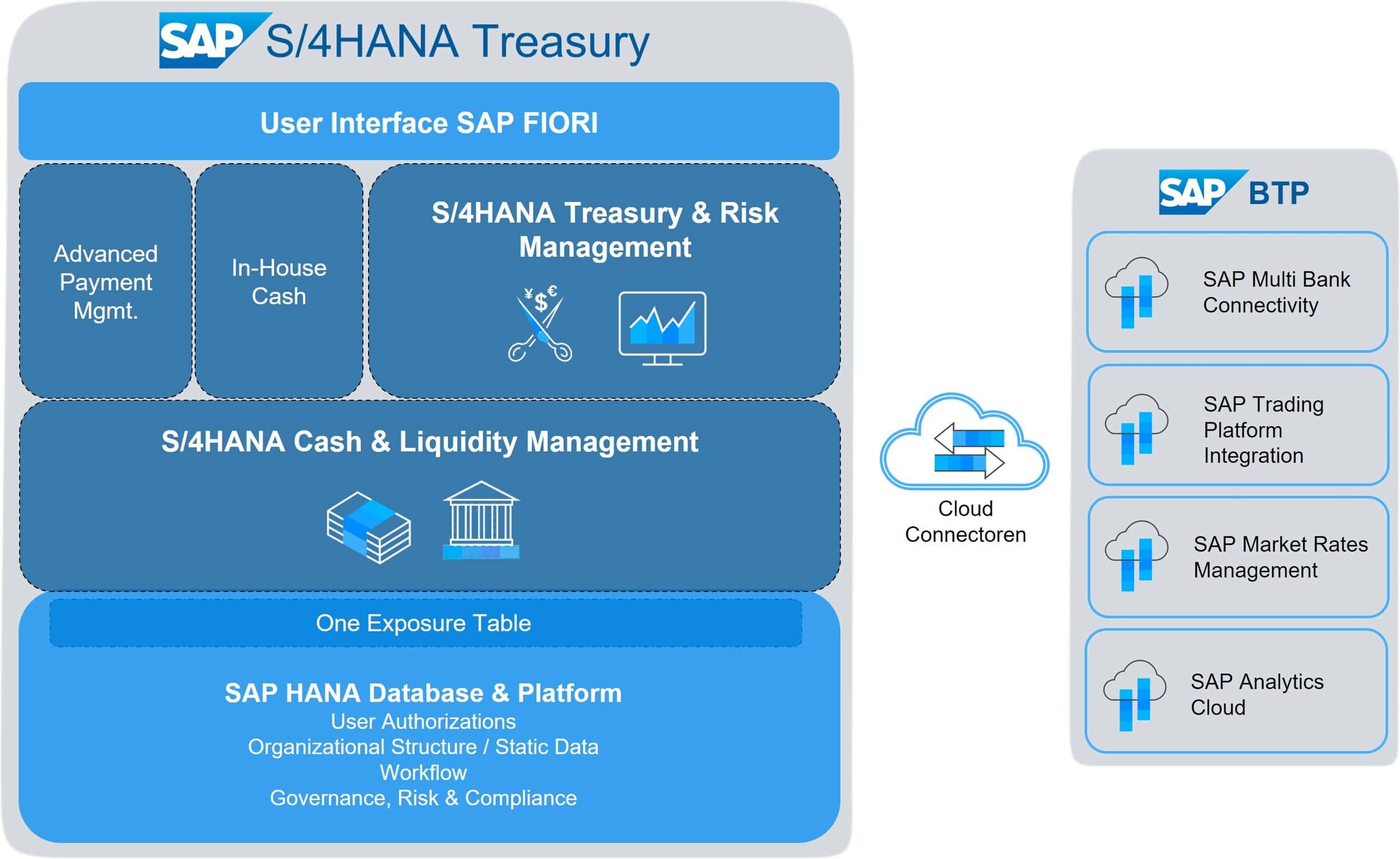
Compared with other TMS providers, SAP consolidates its functionality into a smaller number of modules. A prime example is the Treasury & Risk Management (TRM) module, which combines essential features such as financial instrument management, market and credit risk management and hedge accounting within one integrated solution.
Licensing Model
SAP’s pricing model is highly customer-specific and often depends on usage scope and purchasing volume. Final negotiated prices for modules can differ significantly from list prices, which means the common assumption that SAP is always expensive does not hold true. While initial costs may be higher, it is important to also consider factors such as interfaces, maintenance and the acquisition dynamics of other TMS providers. In some cases, these can lead to noticeably lower product and service quality.
Integration
One of SAP’s key advantages is seamless integration. In treasury, this is particularly valuable as many tasks rely on data from other business areas, such as:
- Actual data from bank statement processing
- Planning data from open items
- Payment files from payment runs
In addition to transactional data, SAP also manages master data across the platform. For treasurers, this means sharing master data such as business partners or bank accounts with accounting, while also consuming data from there. Conversely, accounting requires data from treasury. For example, SAP TRM automatically posts transactions and valuations of financial instruments to the relevant balance sheet and P&L accounts.
This integrated approach delivers significant benefits but also requires considerable effort in implementation and maintenance. Implementing an isolated sub-process is often less complex than embedding it into a true end-to-end process across departments.
Extensions
As a platform provider, SAP naturally distributes its development focus across multiple domains, rather than concentrating exclusively on treasury. Specialized TMS vendors, by contrast, often deliver broader out-of-the-box functionality. However, the effective scope ultimately depends on the vendor’s roadmap and how closely it aligns with an organization’s requirements. SAP’s flexible extension options frequently enable treasury-specific needs to be met with a high degree of precision.
In SAP, functional gaps can be addressed through targeted custom developments, provided the necessary internal or external expertise is available. Prior to extending the system, a structured assessment is critical to ensure alignment with long-term architecture, upgrade strategy and operating model. While tailored enhancements can deliver strong business fit, they may also introduce additional complexity, increased maintenance and potential limitations in future releases – factors that should be carefully evaluated upfront.
Implementation Effort
Implementing SAP is often more complex and resource-intensive than implementing a standalone TMS. The reason is SAP’s high level of integration, which requires coordinated master data and aligned processes across business units and IT throughout the project. The additional effort therefore primarily reflects valuable integration work – not inefficiency.
A good example is bank statement processing. In a standalone TMS, no FI postings are created, which makes implementation faster. In SAP, however, postings are generated directly in accounting, eliminating duplicate uploads into separate systems. This delivers a cleaner end-to-end process, but both implementation and ongoing maintenance require more effort.

Wolfgang Konrad & Nicole Zapf
With combined business and system expertise, we support you in all matters related to SAP Treasury.
